The brain is a detective.
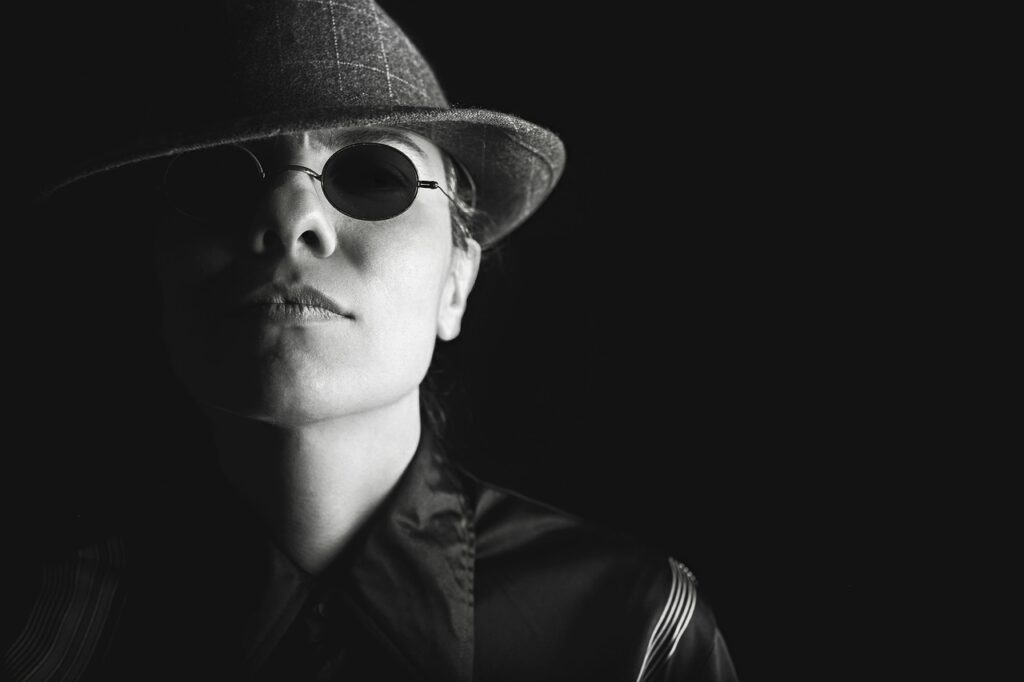
Imagine your brain, sitting at a detective desk. I always imagine an old timey detective… like the 1920’s Dick Tracy movies. Imagine it, visualize it with me as you read this.
So, your detective (your brain) is sitting at his desk when a call comes in. The calls that come in are the observations that your sensory nerves make – the information from your eyes, ears, nose, and more. That call comes in to your brain and relays on the phone the mystery that your brain has to solve. But your brain is just like any other detective. It has catalogued a life time of experiences that it uses to solve every mystery. Also like a detective, it takes notes on the calls, determines if they’re important or if they can go into the trash… Your brain, as a detective then determines… of the information it received, where it goes in the stacks and stacks of evidence and reports that it has on it’s desk.
Detective Brain is always working
The truth is that your brain works all the time, even while your sleeping. Over years and years of evolution, the detective brain has developed incredibly efficient solutions to sort, prioritize, understand, memorize, and process. It’s far more efficient than any Dick Tracy could be. However, these systems that have evolved also skew our perception of the world around us. Including our fundamental beliefs about everything we understand. Our morals, values, expressions, emotions, communication, and even the things we hear through that sensory telephone are all adjusted to fit our brain’s system.
Take one of your core beliefs about yourself… Say the idea that you are “too much” for other people. Your brain has stacks of evidence that it’s acquired over the years that you’ve been alive that tells your brain that you are too much or that you are not too much. What’s more is that every second of your life, you continue to get additional information that leans one way or another.
The brain is a detective, and is still a cop.
Detectives in today’s world are still cops – they’ve gone through trainings upon trainings to ensure they can protect themselves, their comrades, and the public. Because they’ve been trained this way, they are often seeing things through a lens of danger assessment. And your brain works the same way. The idea that you are “too much” comes from conditioning – where your parents, friends, teachers, and others that you cared about growing up shared with you feedback of how to protect yourself. This is an evolutionary conditioning that stems from when our societies decided to pass judgement on others and exile them from our communities.
I know it’s hard to remember a time without smart phones, but when I was born there was no such thing, and while we had phones we weren’t yet a global society. It was still hard to maintain relationships if you left your family. Thousands of years ago, you were lucky to survive if you were exiled from your community. People actually died from weather exposure, encountering violent people or animals, and a host of other reasons. So the ancestors we decended from, as humans, were really good at fitting in. Which means that if you are told even once that you are “too much” for other people, your brain considers that important information for your survival and ensures that that information carries more weight in an investigation.
The detective brain is bias
Unfortunately, just like all humans, including police officers, the human brain is bias. It’s always been that way, it’s designed to be that way for our survival. If we didn’t have the efficient systems of cataloguing that we do, our brain would get a sensory input such as a growl from a dangerous animal and it would just throw that information in the trash, or worse, simply add it to the billions of pieces of information that we process each day, completely ignoring it. We would have went extinct faster than the dodo bird if our brain worked like that. (Fun fact, the do do bird is on the list for scientists to clone and bring back from extinction!)
So bias saves our life, but it works against us when we’re trying to improve our mental health. Because your brain is wired to protect you, it gives so much more weight to evidence that proves that you are “less than,” or that you are “too much.” It’s like having a stack of evidence that is half the size of the other but weighs thousands of pounds more.
How do we shift our brain’s perspective?
Well, the detective needs more evidence that tells you the things you need to hear. We are rapidly shifting to a society that appreciates people for all of the value they bring to the table. Corporations and governments may lag behind the rest of us, but I’ve seen a huge shift in the attitudes of the people I experience in general. People are genuinely curious about behavior which lends to us being more understood as neurologically diverse. Because of this, it’s safer now than it has been in the past for you to release the idea of danger in regard to your behavior.
But it’s not just a switch that you can turn off. It’s much more complicated and difficult. Our brains have been wired, trained, conditioned, and traumatized to believe certain things about ourselves. The detective has beliefs about what life SHOULD look like, and it hangs on to those beliefs out of a need to protect you.
The way we can shift our detective’s thoughts is by showing it another way.
Just like a detective who is investigating a murder, if all evidence points in one direction, there’s no reason to look elsewhere. But your brain isn’t actually investigating a murder, it’s trying to determine what is safe and what isn’t. It does that by taking all of the information you’ve ever collected to build the case. So, by providing contrary evidence to what your brain believes, you can give it a reason to find new evidence.
If your brain holds on to the belief that you are “stupid” for instance, it’s using every failing grade, every mistake, every silly thing you’ve said and done to remind you of this so that you don’t “step out of line” again. But if you start actively looking at all the ways you’re smart… like how despite a few failed tests, you were able to learn the things you needed to to move forward in life, Like how you were super smart in clicking into this blog and reading it. See what I did there? But seriously, you ARE smart. I promise. All you have to do is starting recognizing situations in which you’d find yourself smart if you were someone else and pointing them out.
Even detectives have bias
Despite what we want to believe about our justice system, the people on the side of the law are always bias. Even those who know that and try really hard not to allow their own bias to get in the way of the truth. It’s not intentional, it’s just something our brains do, it’s natural and normal to have bias. The important thing is that our brains are malleable. You can actually re-wire your brain, but it doesn’t happen overnight.
Just like a detective isn’t going to be able to change their entire lives and career’s worth of beliefs in just a few hours, we can’t expect our brains to do that either. However, it is possible and I know this because I have had it happen to me. I have spent years beating myself up over things, but as I learned how to re-wire my brain I’ve been able to change the things my brain sees, and the things my brain things my brain tells me.
I’ve shared some of these things in my upcoming book (It’s still in editing but I’m hoping to have it ready by March. Join my Newsletter below if you want to know when it’s ready.) Check out my first book here.
If you’d like to get some back up for your brain, call it in. I’m happy to assist. Book a call with me and lets discuss what you have going on.
Image by Ryan McGuire from Pixabay






0 Comments